
Contactless payments make paying for veterinary care faster, easier, and safer for both pet owners and clinic staff. By allowing clients to tap a card, phone, or smartwatch, clinics can reduce wait times, limit physical contact, and improve the overall checkout experience. This modern payment option also helps clinics run more smoothly, especially during busy hours or curbside visits, while meeting today’s client expectations.
Why Contactless Payments are Transforming the Veterinary Clinic Experience
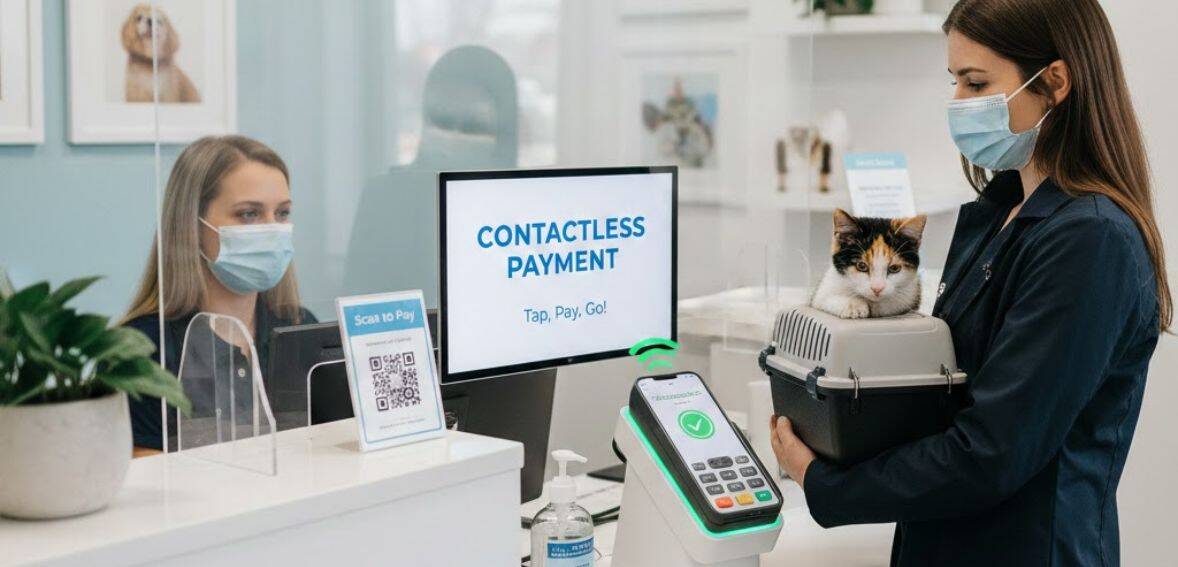
Providing clients in a veterinary clinic with contactless payment methods has become much more than a convenience. It has become a necessary aspect of providing a seamless and stress-free client experience. Clients today are accustomed to making payments quickly and without making contact in almost all aspects of their everyday lives.
By allowing clients to make payments through contactless cards, mobile wallets, or online payment links, the payment process becomes more efficient. Such efficiency will especially benefit your clinic during peak times. Quick payments reduce waiting time, lower frustration, and leave clients with a more positive impression of your clinic. Over time, this convenience builds loyalty and encourages repeat visits.
Contactless payment methods will also contribute to improving the financial capability of pet owners. Flexible payment solutions, such as digital payment methods or financing, will give the pet owner the flexibility to deal with unexpected veterinary expenses. These convenient payment methods will give the pet owner flexibility in seeking medical attention without waiting for a convenient time.
Contactless payment systems ease the work of doctors and staff operationally at a clinic. This technology eliminates manual billing and cash transactions. All transactions are recorded automatically, which reduces the possibility of discrepancies and saves staff time in accounting. This provides enough time for staff to devote to patients rather than waiting in queues to complete transactions or counting cash at the end of the day.
Additionally, contactless payments enable clinics to have greater financial visibility as well. They are in a position to view payments in real-time and are able to identify various trends. Delays are minimal, and therefore, there are no follow-up calls regarding payments, making it easy for clinics to make long-term plans based on this consistent flow of money.
Trust is another significant advantage that comes with technology. Clients are assured of safety through clear invoices and contactless transactions. Since pet owners are aware that transactions are safe and secure, this makes them comfortable with the whole process. This, therefore, helps build long-term business and improves the reputation of the clinic.
Lastly, providing modern payment alternatives, such as contactless payment, gives veterinary facilities an edge over their competition. With changing demands from clients, facilities that keep up are viewed as professional and up-to-date. In an evolving market, contactless payment is an important factor that makes a significant difference in keeping loyal pet owners.
How to Accept Contactless Payment
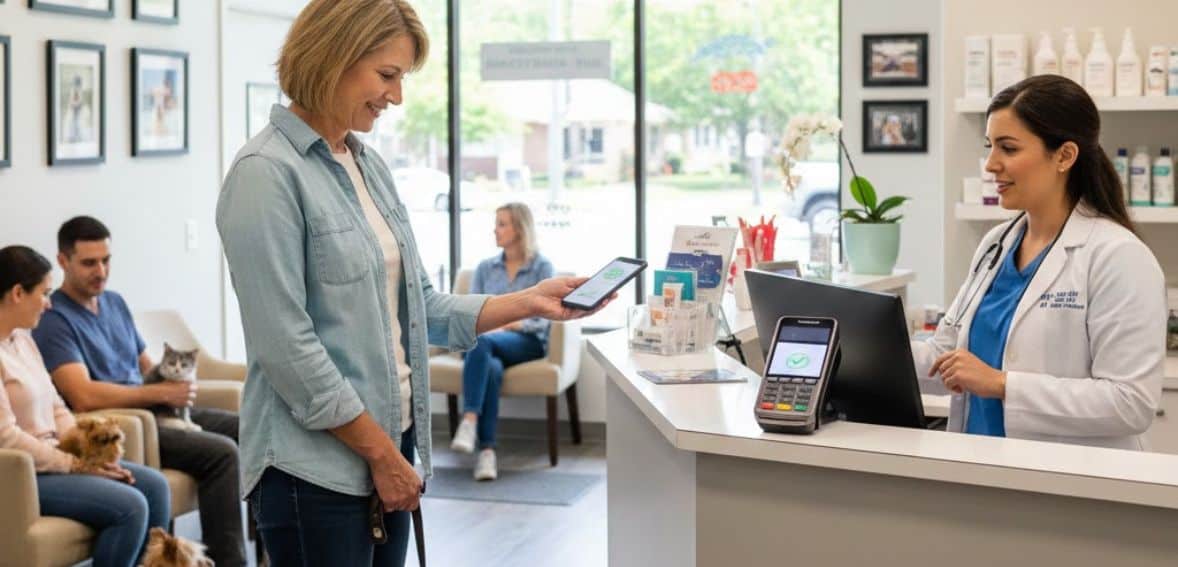
Contactless payment systems benefit both clinics and their clients. Rather than using keypads and passing cards from one person to another, clients can easily and safely make their payments using convenient and contactless ways. Even without a card reader, a card or mobile device with a wave sign indicates readiness for a contactless transaction. A client will only need to wave it near the card reader, and the transaction will be complete in a matter of seconds.
Firstly, a very easy option for veterinary clinics could be the utilization of a branded mobile app. Through this application, pet owners are able to make payments for appointment scheduling and treatments in advance. This would be most effective for pet owners who opt for teleconsultations. Clients could also make payments for their pets’ food and medications in advance.
Secondly, another easy method is to send payment links through text or email. Most payment systems will enable the practice to create a safe pay link for the client. This is helpful in case the pet is ready to be taken home, and the client is not in the clinic. The only extra process will involve checking the payment status, which is still quicker compared to the process involving credit card payments in the clinic.
Some practice management software systems already offer support for contactless payment systems. Such tools allow clients to make payments using their car by means of tap-and-go, mobile payment, and saved cards. They also support other common payment systems like Apple Pay and Google Pay. You can ask your software company if you are doubtful about what can be done with your systems.
Online shopping and pharmacies are another great option for reducing costs incurred in clinics. Clients are able to order their food and medicine online. Products can also be delivered to their homes. This helps cut foot traffic and also helps clients from looking for products from other online sellers.
Contemporary payment technologies also include the functions for payments through the use of RFID, NFC, and cards, as well as mobile and wallet payments. This method is signature and PIN-free, making the process clean and quick. Most banking apps also allow contactless payments, providing greater convenience to clients.
However, sometimes it may be necessary to accept payments over the phone. In cases where the pet is now ready to go home to the client, employees can take the card information to initiate card-not-present transactions. Although this takes longer to complete compared to other forms of payment, this technique comes in handy when other forms of contactless payment are not possible.
Is Contactless Payment Safe for a Vet Clinic?
Many pet owners may be unsure of using their smartphones for payments, but the truth is that contactless payments are very secure. In many regards, they are more secure than using a card swipe at the front desk of a pet clinic.
In traditional magstripe cards, the data from the card is stored on the stripe. Also, once the data is obtained by another individual, the card can easily be replicated. Thus, magstripe transactions are more vulnerable to fraud compared to other payment systems.
Contactless payment systems function in a different way. In phone-based card payments, watch payments, or tap cards, the actual card number is not transmitted. Rather, the system employs a secure digital code known as the token. This coded information is encrypted to be used for the one-time task only. If the card gets compromised, the details would be of no use to potential fraudsters.
Chip cards also have higher security compared to swipe cards, and they also support contactless payment.
Nevertheless, there is also an additional security feature provided by digital wallets. Pets will not require owners to carry any plastic card, which could be lost or stolen during busy periods at their clinics.
Challenges of Using Contactless Payments in Veterinary Clinics
Contactless payment methods have many advantages, such as efficiency in terms of how quickly the payment process is completed. However, there could still be some difficulties faced by veterinary clinics in using such services,
Firstly, from a pet owner’s point of view, acceptance can be an issue. Smaller clinics or private practices may not yet offer contactless payment options. When clients visit different clinics, they may find that tap-to-pay works in some places but not others, which can feel inconvenient.
Secondly, limits on transactions may also result in frustration. Contactless cards also have limits on the maximum amount one can spend on a single transaction. If the cost of treatment is high, the pet owner might have to enter his/her PIN number or use another mode of payment. In cases of emergencies or major surgeries, this takes slightly longer.
Thirdly, the technology gap can also be a barrier. Mobile contactless payments require smartphones that actually support NFC. The clients, especially older owners of pets, may not have compatible devices or might not feel comfortable using them.
Let’s not forget that security concerns are also common. As the contactless mode of paying does not always involve the use of a PIN, some clients fear misuse in case their card or phone gets lost. Although banks usually offer strong fraud protection, it may still affect confidence.
One of the important challenges for veterinary clinics is customer hesitation. Even though contactless systems are secure, some pet owners prefer traditional payment methods. For a smooth experience, clinics may need to educate clients and offer multiple payment options to make everyone feel comfortable and supported.
Best Practices for Managing Contactless Payment
To start incorporating contactless payment options in a vet clinic, one must begin with the preferred means of payment among pet owners. Many customers today are looking for fast and contactless ways to pay using tap-to-pay cards or online payment links. Understanding what customers already use helps the vet clinic choose the most appropriate contactless method.
Secondly, cost will be the next factor to keep in mind. Each contactless payment system has unique fees for processing payments. Inquiring about these charges from the concerned payment system providers will assist the clinic in comparing them for the best that fits into its budget.
Thirdly, payment security is especially necessary in the case of contactless payment methods. The clinics need to install payment systems that adhere to payment security guidelines and ensure that the data of the clients is secure. Reputed providers offer advanced protection from fraud and secure transactions so that the staff and the clients feel secure.
Additionally, contactless payments are most efficient when they interface directly with the clinic’s practice management system. This ensures that payments are recorded immediately, eliminating the need for manual registration and keeping accounts up-to-date in real time. It also facilitates more efficient end-of-day reporting. Let’s not forget that contactless payment options would be ideal for telemedicine appointments. Clients will be able to make payments via their vehicles or homes through text-to-pay links or e-invoices.
Finally, clinics should analyze how effectively the services are being used. Client feedback can show which aspects of the services are convenient and which need to be improved. By being open to change, the clinic will ensure it maintains current trends in payment methods while still offering a secure, fast, and convenient means of payment.
Conclusion
Contactless payments help veterinary clinics create a smoother, safer, and more convenient payment experience for pet owners. They reduce checkout delays, limit physical contact, and support flexible payment situations like remote appointments. With contactless options, the clinics can operate more effectively on a day-to-day basis, satisfy their customers, and keep up with contemporary habits of paying while being able to dedicate more time to the care of their beloved pets.
FAQs
What are contactless payments in veterinary clinics?
Contactless payment services enable pet owners to make payments simply by tapping the payment card or mobile device without physical contact with the payment system.
Are contactless payment methods safe to use?
Yes, as they have encryption and tokenization processes, which secure credit card information as well as prevent fraud or theft of data.
Can contactless payments be used for online appointments?
Yes, they are perfect for receiving online services, whereby clients can make payments from anywhere without accessing the clinic.
Do contactless payments increase clinic efficiency?
Definitely. This is because faster payments result in shorter waiting times and minimize the burden on staff.
Does a vet need any special equipment to accept contactless payments?
Most modern POS systems already support contactless payments, or can be easily upgraded with compatible terminals.